Start with treated wood.
Pressure-treated boards are usually the entry point for a restrained initial budget. Include finishing, waste and labor before choosing.
Understand the tradeoff →A practical guide to what goes underfoot
Wood, composite, PVC, bamboo or aluminum? Compare the real tradeoffs in appearance, maintenance, cost and installation—before you buy.
Compare the materials ↓Explore material guides ↗Free to read. No form required. Published by Ipe Woods USA.
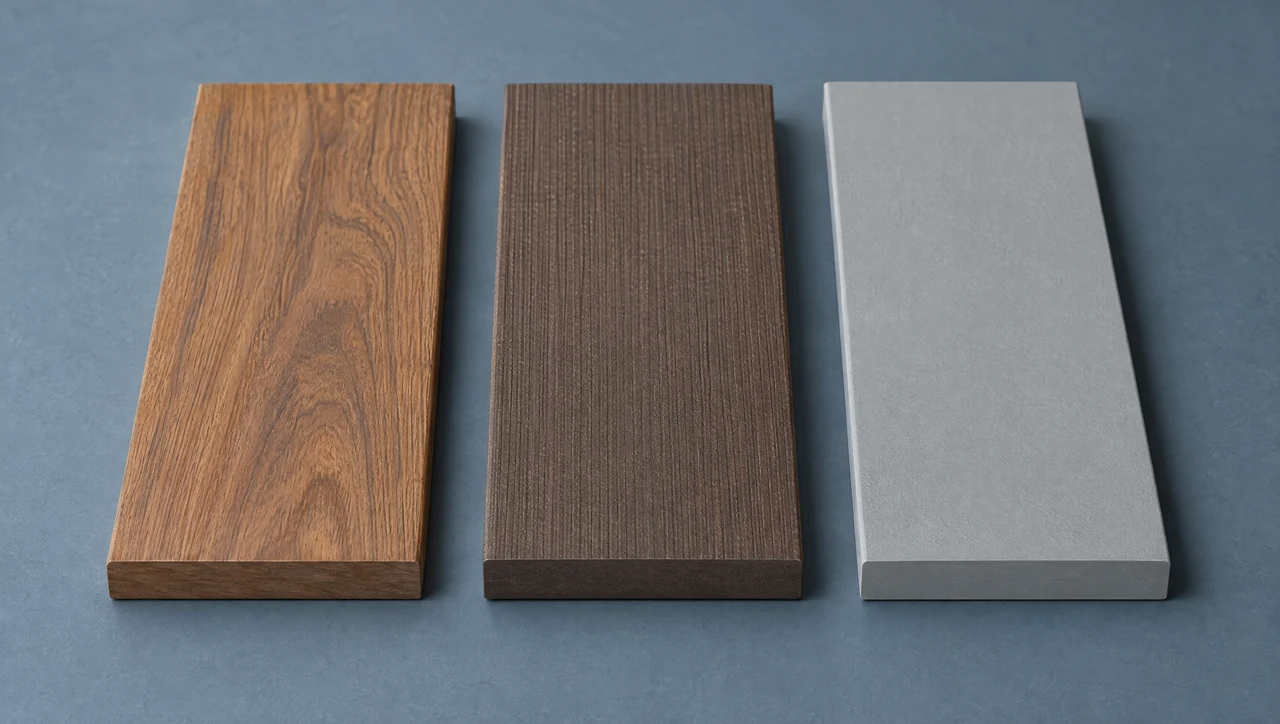
Start with the answer
Pressure-treated boards are usually the entry point for a restrained initial budget. Include finishing, waste and labor before choosing.
Understand the tradeoff →Both reduce routine wood refinishing. They still need cleaning, and the exact color and product affect heat, feel and performance.
Compare the two →Cedar, redwood and dense hardwoods offer different wear, installation and appearance tradeoffs. Real wood changes outdoors.
Meet the materials →The side-by-side view
No single material wins every category. Choose the compromises that fit your deck.
| Material | Why consider it? | Care | Main tradeoff |
|---|---|---|---|
| Pressure-treated wood ↗ | Lowest initial board cost | Regular cleaning; finish as needed | Checks, splinters and moisture movement |
| Cedar & redwood ↗ | Natural softwood appearance | Cleaning and optional color-preserving finish | Dents, grade variation and weathering |
| Ipe hardwood ↗ | Dense natural hardwood | Cleaning; optional oil to retain brown color | More demanding cutting and fastening |
| Cumaru, Garapa & other hardwoods ↗ | Different tones and hardwood choices | Cleaning; finish if preserving color | Species-specific movement and installation |
| Capped composite ↗ | Less routine refinishing | Wash and remove spills; no routine wood staining | Heat, scratches and line-specific performance |
| PVC / polymer decking ↗ | Wood-free board options | Routine washing and compatible cleaners | Thermal movement and reflective heat |
General selection guidance, not measured product ratings. Open a material guide for limitations and installation considerations.
The material library
Lowest initial board cost
Watch for: checks, splinters and moisture movement.Natural softwood appearance
Watch for: dents, grade variation and weathering.Dense natural hardwood
Watch for: more demanding cutting and fastening.Different tones and hardwood choices
Watch for: species-specific movement and installation.Less routine refinishing
Watch for: heat, scratches and line-specific performance.Wood-free board options
Watch for: thermal movement and reflective heat.Real wood with altered properties
Watch for: process- and product-specific limitations.A distinctive manufactured natural-fiber option
Watch for: manufacturing system matters.An alternative to wood-like boards
Watch for: system details, acoustics and finish damage.Straight answers to the big questions
Choose wood for real grain and a surface you can often renew. Choose capped composite when reducing routine refinishing matters more. Compare the exact board, not a promise that either category is always better.
PVC and wood-plastic composite are different constructions. Either can work well; a brand name or the word “premium” does not resolve the choice.
The central tradeoff is a dense natural wood surface versus a manufactured board with less routine refinishing. Neither choice removes the need for careful installation.
Board price, installed price and ownership cost answer different questions. Keep them separate so a cheap-looking quote does not hide missing work.
There is no universally coolest or safest material family. The exact surface, color, site and maintenance determine what visitors experience.
A new surface is only as useful as the structure and installation beneath it. Compare board and framing requirements together.
A recycled-content percentage, a renewable raw material and a long warranty measure different things. None alone proves the best environmental result or predicts a deck’s useful life.
Common questions
The best fit depends on your budget, desired appearance, care preferences and site. Treated wood is a common budget starting point; dense hardwoods offer natural character; composite and PVC reduce routine refinishing. Verify the exact product before committing.
No. It still needs cleaning, debris removal and care compatible with the product. Reduced refinishing does not eliminate maintenance.
There is no universal material winner. Compare the actual colors in the intended sun, and consider shade. Every decking family can become hot.
Prioritize documented wet-use suitability, traction, compatible fasteners, drainage and cleaning. Texture or a wood-free core alone does not establish a safe pool surround.
There is no reliable single answer for a material family. Installation, exposure, framing, care and the exact product matter. A warranty term is not a predicted lifespan.
Possibly, after the structure and connections are inspected and found suitable. The new board may require different joist or stair supports.
Often that is an intentional appearance choice. It still requires cleaning and inspection; confirm suitability and care for the selected species and product.
These material summaries explain general selection tradeoffs. They are not laboratory ratings. Check current documents supplied with the exact product for installation, care and warranty requirements.
Editorial review: November 3, 2026. Product lines and documents can change. Operated by Ipe Woods USA, a hardwood supplier.
After you understand the materials, document your shortlisted products or ask a specific question.
Optional decision workspace →Discuss hardwood options →